Online Elementary Linear Algebra Course - Distance Calculus
What is the difference between "Linear Algebra" and "Elementary Linear Algebra"?When you see the term "Elementary" in the title, they are specifically talking about the sophomore-level Linear Algebra course commonly taken after Calculus II.
There are more advanced Linear Algebra courses available, usually taken by math and computer science students, which are sometimes called Advanced Linear Algebra, or Computational Linear Algebra. These are courses that jump into the math theory of Linear Algebra, and usuall require a student have had a course in group theory or abstract algebra.
Most students looking for a Linear Algebra course are looing for "Elementary Linear Algebra".
What is the difference in a taking a textbook/lecture based course on linear algebra vs Distance Calculus Linear Algebra?
There are huge differences between our Linear Algebra course, which is Mathematica-based, and a traditional textbook/lecture course.
Our Mathematica-based course is highly experimentation-based - running experiments graphically, numerically, algebraically, to get at the concepts of linear algebra as you would in a chemistry or physics lab.
Traditional Linear Algebra courses usually center on doing small calculations you can do by hand, and then concentrating on abstract concepts of linear algebra, avoiding difficult calculations in favor of ... sometimes proofs, sometimes just calculations that can be completed by humans on paper.
Our Distance Calculus Linear Algebra course is perfect for students who might be interested in a "Computational Linear Algebra" course, although that course title is usually reserved for courses where the students are actually trying to learn how to program software like Mathematica or manual programs to do the computations. Those courses are more about numerical analysis, as they assume you already completed an Elementary Linear Algebra course before.
Here is a video about our Linear Algebra course via Distance Calculus @ Roger Williams University:
Linear Algebra Course
Multivariable Calculus & High School
After AP Calculus for High School Students
Linear Algebra course can best be described as a "first course in the study of Linear Algebra and Matrix Theory".
This course has many names, all being equivalent:
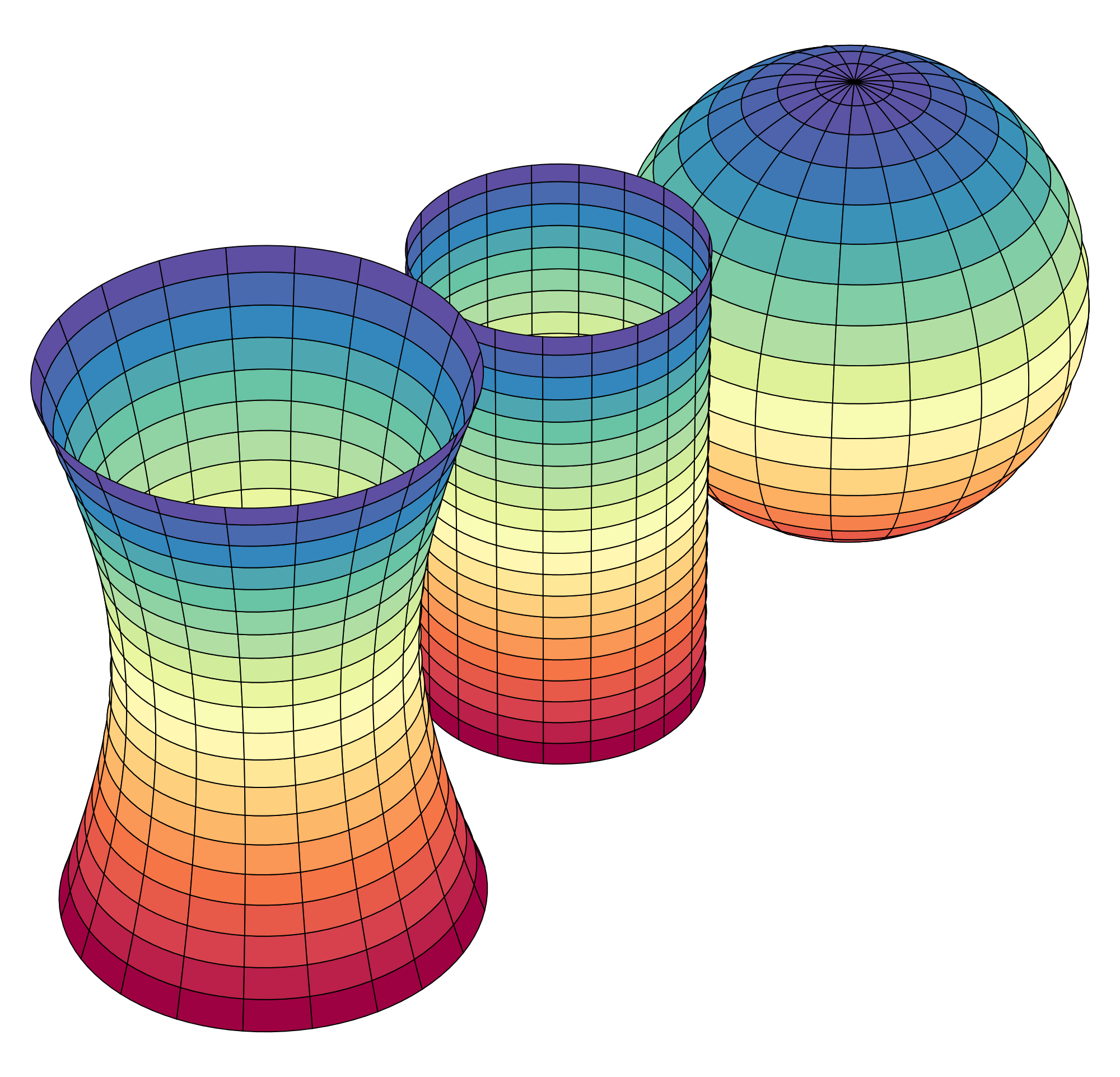
Our Linear Algebra course differs from a classroom/textbook-based course in that we employ Mastery Learning so that you complete all assignments at 100% to assure competancy, as well as our curriculum shifting the course to a laboratory-style course, where theorem/lemma/proof type exposition is replaced by running experiments in Mathematica as you would in a science laboratory to empirically deduce the concepts and behaviors of Linear Algebra, both solvable (classically) via hand-based techiques, as well as studying Linear Algebra that can only be solved and investigated graphically and numerically using a computer. The Linear Algebra curriculum is highly visual and based upon observations of experiments run in Mathematica.
At Distance Calculus, we call our "Linear Algebra" course as Linear Algebra - DMAT 335 - 3 credits.
Below are some links for further information about the Linear Algebra course via Distance Calculus @ Roger Williams University.
This course has many names, all being equivalent:
- Linear Algebra
- Matrix Theory
- Linear Systems of Equations
- Linear Spaces
Our Linear Algebra course differs from a classroom/textbook-based course in that we employ Mastery Learning so that you complete all assignments at 100% to assure competancy, as well as our curriculum shifting the course to a laboratory-style course, where theorem/lemma/proof type exposition is replaced by running experiments in Mathematica as you would in a science laboratory to empirically deduce the concepts and behaviors of Linear Algebra, both solvable (classically) via hand-based techiques, as well as studying Linear Algebra that can only be solved and investigated graphically and numerically using a computer. The Linear Algebra curriculum is highly visual and based upon observations of experiments run in Mathematica.
At Distance Calculus, we call our "Linear Algebra" course as Linear Algebra - DMAT 335 - 3 credits.
Below are some links for further information about the Linear Algebra course via Distance Calculus @ Roger Williams University.
- Linear Algebra Online Course FAST
- Linear Algebra Quick Online Course For Credit Start Immediately
- Linear Algebra Accredited Online Course
- Linear Algebra Summer 2026 Online Course
- Linear Algebra Winter 2026 Online Course
- Linear Algebra Summer Course
- Linear Algebra Winter Course
- Linear Algebra Spring Course
- Linear Algebra Fall 2026 Online Course
- Linear Algebra Fall Course
- Linear Algebra Online Accredited
Distance Calculus - Student Reviews
Posted: Jan 12, 2020
Courses Completed: Calculus II
I took Calculus II through Distance Calculus and can't recommend it enough. Being able to take the course at my own pace while I was working full time was tremendously helpful, especially since I hadn't taken a math course for 5 years prior. The instruction was excellent and the software they used to teach the course was intuitive and facilitated the learning process very well. This calc II class enabled me to take multivariable calc, linear algebra, and real analysis at Harvard University's extension school, which ultimately qualified me for the economics PhD program that I will graduate from next year. 8 years on, I'm still grateful to Professor Curtis and Distance Calculus.
Posted: Aug 16, 2020
Courses Completed: Calculus I
The course was intense and required a lot of hard work. Professors ready available to assist when needed. Professors presented and explained materials/course work in detail and provided explanations and resources.
Transferred Credits To: University of New Haven, West Haven, CT
Posted: Jan 18, 2021
Courses Completed: Linear Algebra
The program used gives an amazing insight into everything that's happening, that you wouldn't get in a traditional course. All of the lessons are clear and clean, and the professor is very helpful along the way. I learned a lot and am happy with taking this course
Email: courygaffney@gmail.com
Transferred Credits To: Virginia Tech
Posted: Feb 8, 2026
Courses Completed: Precalculus, Calculus I
The courses were excellent. Very flexible and engaging and the platform offers a lot of upper-level courses. Dr. Curtis is an outstanding professor and very responsive. I would take again.
Transferred Credits To: None yet
Posted: Jan 28, 2026
Courses Completed: Calculus I
After two failed attempts at my university, this course helped me understand Calculus. The live maths tool along with Dr. Curtis were especially helpful, allowing me to visualize concepts and expand my understanding. The explanations were clear, the examples practical, and I could learn at my own pace, which built my confidence. Thank you.
Transferred Credits To: University of Namibia
Posted: Dec 18, 2025
Courses Completed: Differential Equations
Transferred Credits To: Saint Joseph High School
 Course Information
 Frequent Questions