Differential Equations + Linear Algebra - Combined Course
Differential Equations + Linear Algebra is a combined 5-credit course covering ordinary differential equations and linear algebra, emphasizing the deep connections between the two subjects, using LiveMath.
Why a Combined Course?
DMAT 346 is a single sophomore-level course covering the standard topics of both Differential Equations and Linear Algebra. We offer it because many colleges and universities across the USA structure these as one combined course rather than two separate ones, usually to lighten the load on engineering and physics students who would otherwise be taking two full courses in the same semester.
The content of DMAT 346 is exactly the same as our standalone DMAT 335 - Linear Algebra and DMAT 321 - Differential Equations courses. Same curriculum, same depth, same mastery standard. It is just packaged together for students whose degree plans expect the combined version.
How DMAT 346 Is Structured
The course is built as 15 modules that alternate between the two subjects. You complete one module from the Linear Algebra side, then one module from the Differential Equations side, and back again, all the way through:
- Module 1: Linear Algebra
- Module 2: Differential Equations
- Module 3: Linear Algebra
- Module 4: Differential Equations
- ... continues alternating ...
- Module 15: final module
By the time you finish the 15th module, you have completed the full content of both subjects, in lockstep with each other.
A Long Course - Plan Accordingly
By its very nature DMAT 346 is the longest course we offer, eclipsing even the marathon Calculus II course. This is not a course that can be done quickly or on a fast-track schedule.
- If you need a faster route through one or both subjects, the standalone DMAT 335 (Linear Algebra) and DMAT 321 (Differential Equations) courses are better choices, since each can be sized to its own schedule.
- If your transfer plans include a school whose curriculum requires the combined course, then DMAT 346 will articulate more cleanly than transferring two separate courses, and the longer timeline is worth it for the transfer fit.
The Mathematical Payoff: Where Linear Algebra and Differential Equations Meet
Linear Algebra and Differential Equations are deeply related, and the combined course leans into that connection in a way that two separate courses never can.
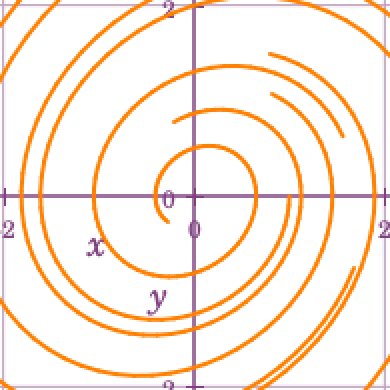
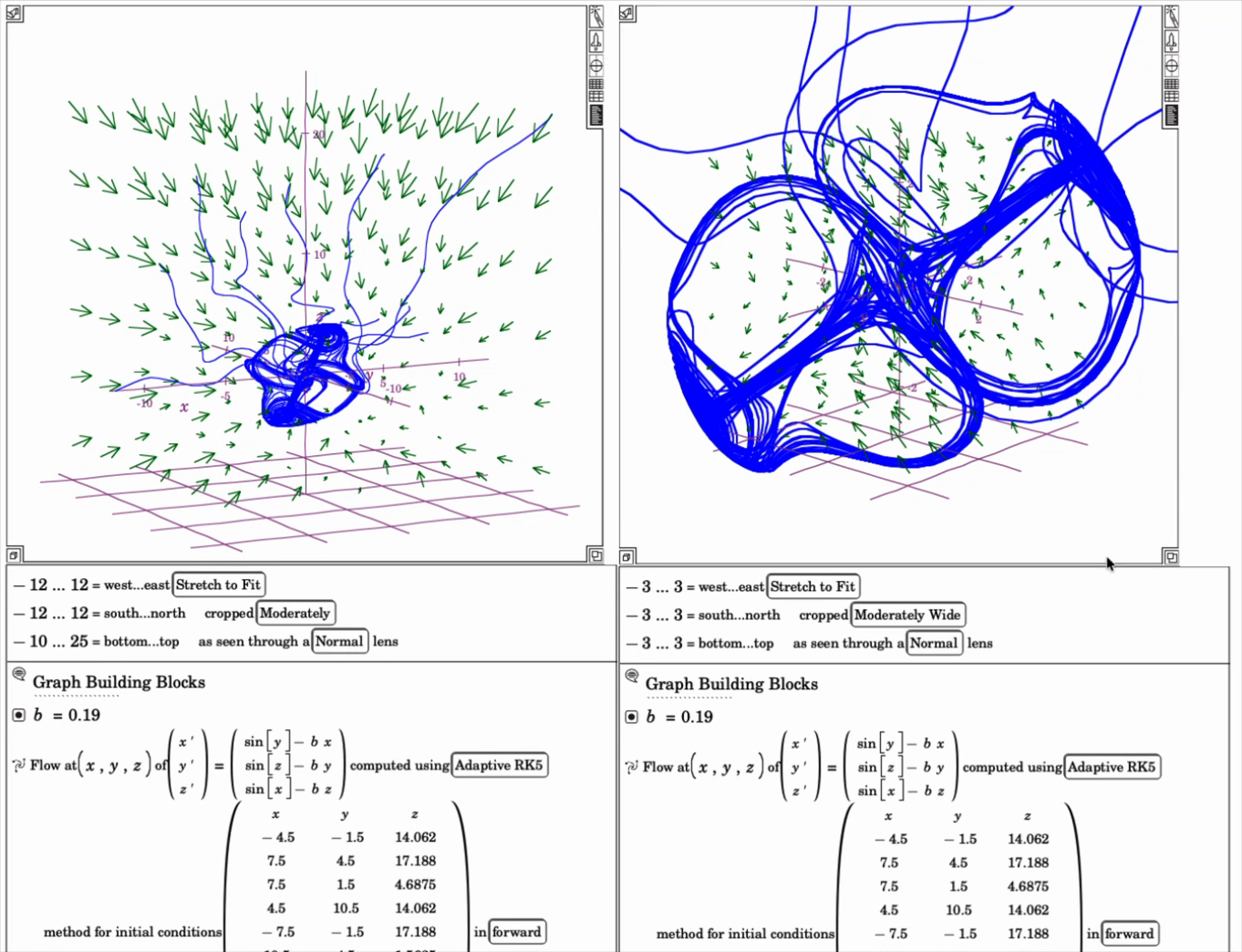
In the last part of the Differential Equations content - when you reach flows and phase portraits of systems of linear differential equations - the work starts to feel much more like a Linear Algebra course:
- You use eigenvalues and eigenvectors to characterize the behavior of solutions.
- You diagonalize matrices as a technique for solving systems of differential equations.
At the same time, in the Linear Algebra portion of the course you are marching toward exactly those sections: eigenvalues, eigenvectors - all a payoff of starting the Linear Algebra course with a thorough study of SVD analysis - so you reach the concluding material together like two asymptotic curves joining smoothly. So when you hit those sections in the Linear Algebra side, you are simultaneously seeing the same topic on the Differential Equations side.
That is a wonderful blending. Instead of two separate courses with overlapping mathematical themes, you watch a single subject reveal itself in both algebraic and dynamical form. By the end, you have become a master of both Linear Algebra and Differential Equations through one large 5-credit course.
DMAT 346 - Learning Outcomes
- To understand the core connection between matrix algebra and a study of systems of linear equations
- To understand and compute measurements of vectors and their geometry
- To understand and compute core matrix algebra operations and their geometrical interpretations
- To understand and compute the fundamental properties of determinants and inverses of matrices
- To understand and compute Singular Value Decomposition
- To understand and compute the core concept of rank and its variations
- To understand and compute Gaussian elimination and other strategies for finding solutions to systems of linear equations
- To understand and compute bases, change of bases, spanning and linear independence, kernel and image sets
- To understand and compute the diagonalization of a matrix via SVD and Eigenvalue-Eigenvector constructions
- To understand orthogonalization and the Gram-Schmidt process
- To understand the core construction of the differential equation and its classification
- To understand the role of the forcing function in differential equations
- To understand, observe, and compute steady state solutions for differential equations
- To understand, observe, and compute solutions with various forcing functions including DiracDelta, step, oscillatory
- To understand and compute solutions of second order differential equations and oscillators
- To understand and compute manual solutions using classical techniques
- To understand and compute with the Laplace Transform method
- To understand and compute graphical and numerical solution methods
- To understand and compute solutions of linear systems of differential equations
- To understand and compute polynomial approximations to solutions of differential equations
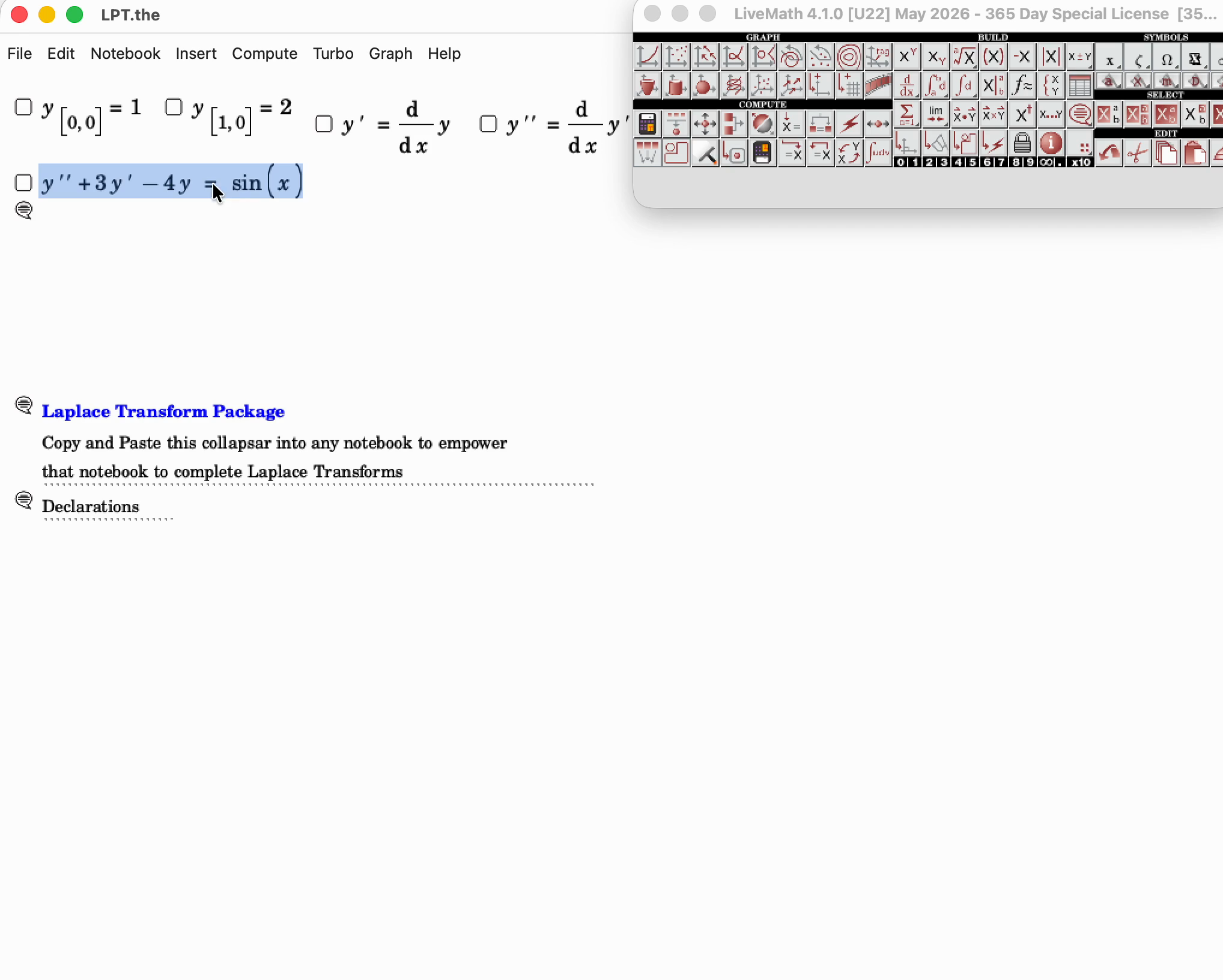
DMAT 346 - Syllabus of Topics
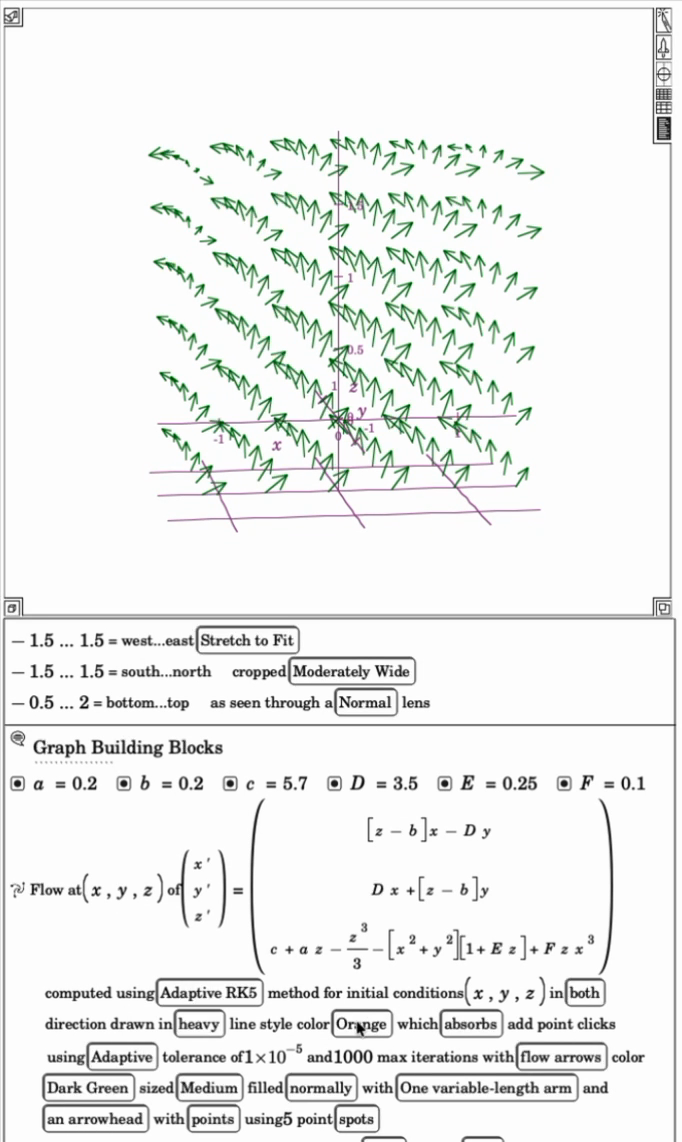
Distance Calculus Referenced Colleges & Universities (29 Years - 393+ Institutions)
Distance Calculus students have transferred course credits to these colleges and universities:
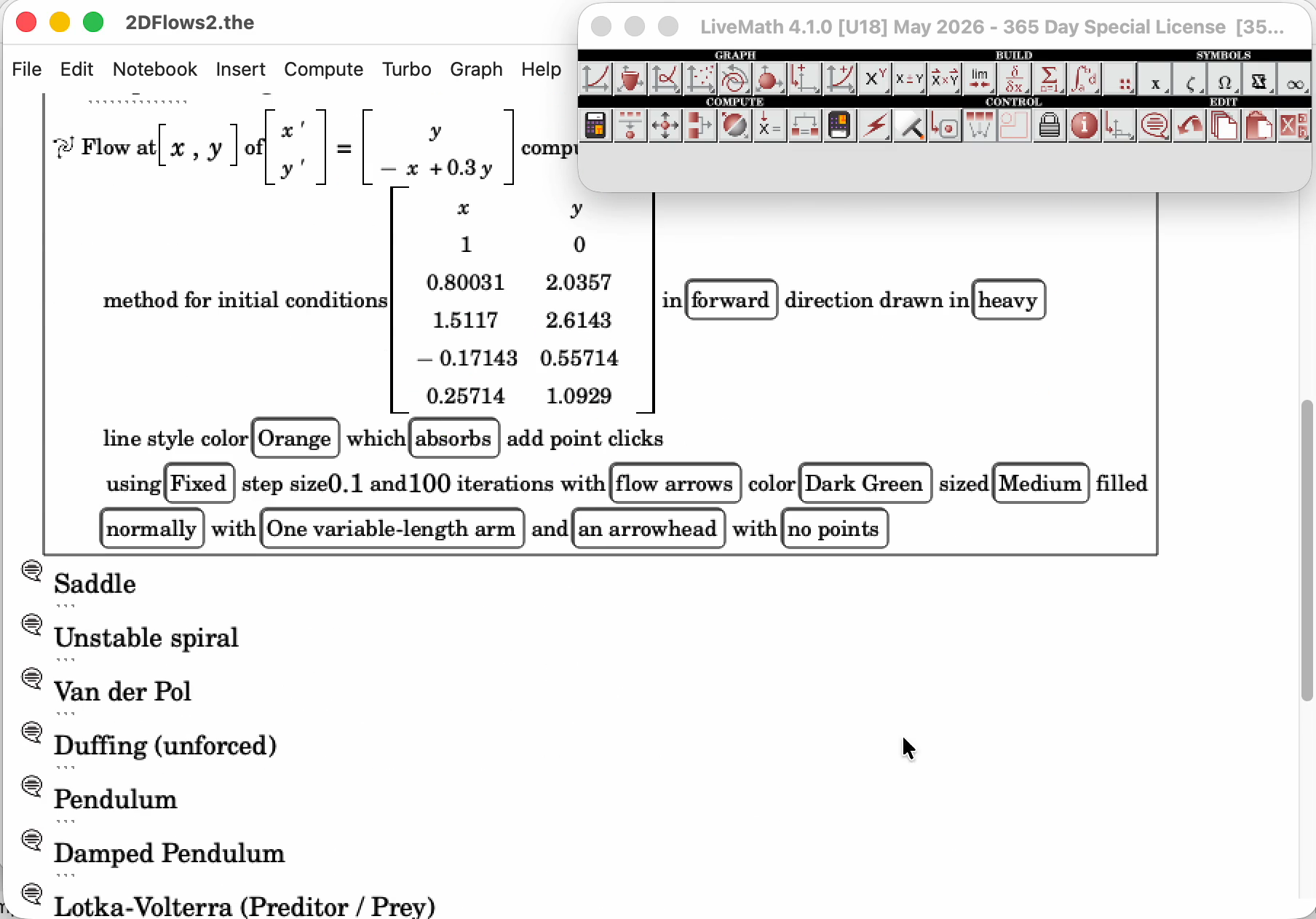
Distance Calculus - Student Reviews
First, this course uses software called LiveMath. This software can be a little bit challenging to get the hang of, but once you do get the hang of it, it's super easy. Remember that for all new things, it takes a bit to get used to it. Overall, I was highly satisfied with this course. I thought that the instructions were extremely detailed, including a video and a textbook explaining every different concept. In addition, this course offered exposure to a lot of different aspects of finite math. I think that many would agree with me on the following, that, you know, when a teacher is passionate about what they are teaching, it is so much more enjoyable, and you can definitely see that in this course. This course can be challenging at times. Maybe it'll be easy for you, maybe it'll be hard, but I think it's important to remember that the things that challenge us are, you know, the things that make us learn and the things that make us better. There's also a math chat option for if you need help or if you have any questions. Overall, I would recommend this course. I actually initially went into this course looking for an easy course to just help me get the credit requirements, but it ended up being an amazing learning experience and completely shifted my perspective on math overall. And another thing that I thought was great in this course is throughout so many different lectures, the professor would explain how each different thing can be applicable in life. And I think that, you know, that is a lot of what people think about when they are learning something. They're like, will I ever use this? Do I need to learn this? And a lot of this actually is really applicable. And I think that even if, you know, you may not be doing these math equations in your future, I think that, you know, the psychology behind these and the rules can be applied to so many different fuacets of life.
The only problem with the course is the lack of pen and paper work. This shouldn't come as a crazy surprise with an online course, but there is not much emphasis on symbolic computation. Mathematica or other software does most of the heavy computation for you. The lectures usually show how to solve the problems through paper, but those skills are rarely put into practice. Literacy Sheets act as a way to do some of that (especially with the Calculus II & III course).
All in all, this isn't a huge issue. I just memorize and practice things like double integration, Laplace, ODE solving, matrix diagonalized form, row operations, etc. With a little outside work, this resolves itself. Without Roger WIlliams, I probably would not have been able to take any of these math courses in highschool.
So overall, a great choice for highschool advanced math, especially with transferrable credits.






More Details
- How Our Courses Work
- About the Mastery Learning Format
- Asynchronous & Self-Paced
- Computer & Software Requirements
- Maximum Course Time (1 Year)
- Completion Time Estimates
- Academics
- Course Prerequisites
- Course Syllabi
- Grading Policy
- University Accreditation (NECHE)
- Course Articulation/Transfer
- How Exams Work
- Explore
- Honors Course Track
- Student Reviews
- Introductory Videos
- Who Can Enroll?
Frequent Questions
- Enrollment
- When Can I Enroll?
- When Can I Start My Course?
- Term Dates: Enroll Anytime!
- Costs & Tuition
- Credits & Transcripts
- Will My Credits Transfer?
- Letters of Recommendation
- Is My College On Your Transfer List?
- Other Questions
- Frequently Asked Questions
- Is This the Same as AP Calculus?
- Are These Computer-Based Courses?
- Are These Online Courses?
- Financial Aid?